Fear of Missing Out (FOMO) in Trading
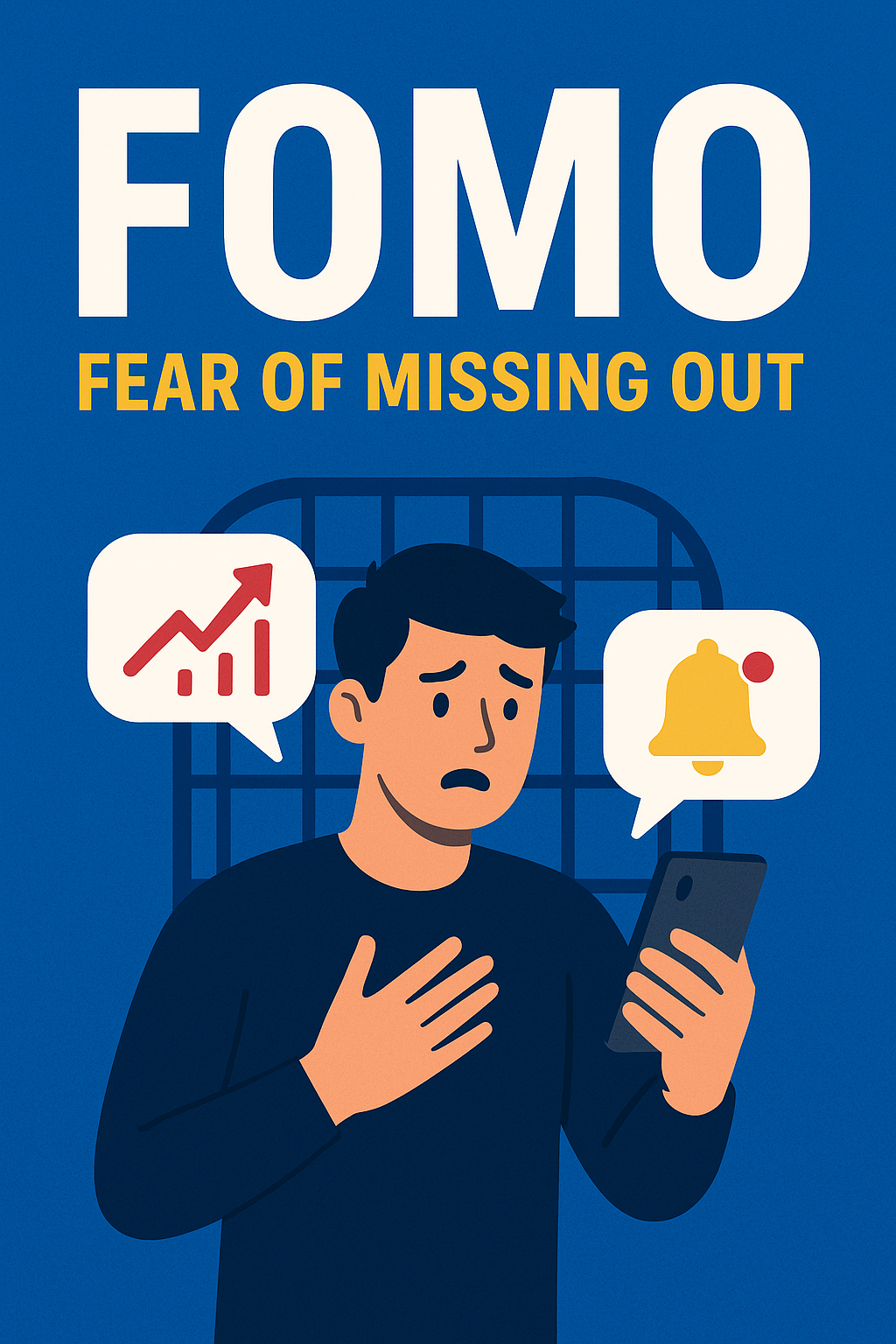

You open your trading app and the numbers seem to be moving without you. Stocks you were watching yesterday are soaring, every alert reminding you of profits you didn’t capture. Friends are posting screenshots of their gains online, celebrating their wins while you wonder: Why didn’t I act sooner? That sinking feeling in your chest the nagging thought of “maybe I should have bought earlier” is the classic Fear of Missing Out (FOMO).
What is FOMO?
FOMO, or Fear of Missing Out, is the anxious belief that others are experiencing opportunities while you’re being left behind. Often triggered by social media, it can make people feel excluded or inadequate and drive them to join in even when it doesn’t align with their goals or values. At its core, FOMO taps into the human need for connection, belonging, and opportunity. While sometimes motivating, it frequently leads to stress, impulsive choices, and regret.
FOMO in the Share Market
In trading, financial opportunities replace social events as the trigger. Rising stocks, trending IPOs, and viral “hot tips” can push investors to jump in without proper research, often at inflated prices. This emotional pull is not only about fear it’s also fueled by greed, envy, jealousy, impatience, and overconfidence. Acting on these impulses usually means trading without a clear plan or exit strategy, exposing investors to unnecessary risks.
Why Traders Fall into FOMO ?
Traders are often vulnerable to FOMO due to a combination of psychological and external factors. Rapidly rising prices create a sense of urgency, prompting them to “get in before it’s too late.” Social media and news hype amplify this excitement by highlighting only success stories, while peer pressure from friends, family, or online groups encourages herd behavior. Personal emotions such as greed and impatience fuel the desire for quick wins, and the urge to recover losses can tempt traders into taking oversized risks after setbacks. Overconfidence from past wins may lead to reckless speculation, and breaking news or economic events often trigger knee-jerk reactions. Together, these forces cloud judgment and pull traders away from disciplined, rational strategies.
The Cost of FOMO
Left unchecked, FOMO can have far-reaching and detrimental effects on a trader’s performance and mindset. It often leads to impulsive trades made at the wrong time, driven more by emotion than careful analysis. This impulsivity can result in overtrading, increasing portfolio turnover and transaction costs, which gradually erode returns. The constant pressure to “catch the next big move” amplifies emotional stress, creating self-doubt and anxiety that interfere with rational decision-making. Over time, repeated mistakes and missed opportunities can weaken long-term profitability and diminish confidence in one’s trading abilities. Rather than following a disciplined, strategic investment plan, traders caught in FOMO tend to act reactively, chasing short-term gains, exposing themselves to unnecessary risks, and creating a cycle of stress and underperformance that can be difficult to break.
How to Manage FOMO in Trading
Controlling FOMO is essential for staying rational and protecting capital, and there are several proven approaches to help traders maintain discipline. First, creating and strictly following a trading plan defining entry, exit, and risk levels in advance provides a structured framework that reduces impulsive decisions. Setting realistic profit expectations is also crucial; no trader can catch every market move, so focusing on steady, consistent returns prevents chasing unrealistic gains. Limiting social media and news overload helps filter out hype and avoids trading solely based on others’ wins or hot tips.Prioritizing risk management by risking only 1–2% of your portfolio per trade helps minimize emotional swings and potential losses. Practicing patience is equally important: missed opportunities are not the last, and new setups continually arise. Using stop-loss and take-profit orders automates exits, removing emotions from volatile markets. Regularly reviewing past trades, especially those influenced by FOMO, reinforces the importance of discipline, while maintaining a trading journal allows you to track emotions and decisions to identify patterns and improve over time.Starting small when curiosity tempts you to trade prevents overcommitting capital, and adopting a mindset shift understanding that missing one trade does not mean missing success helps protect your capital for future opportunities. By combining these strategies, traders can reduce the influence of FOMO, make more rational decisions, and build long-term profitability and confidence.
Final Thoughts
FOMO is a natural human emotion not a weakness. Almost every trader experiences it, especially in fast-moving markets. While it can sometimes keep investors alert, more often it leads to impulsive actions, unnecessary risks, and poor outcomes.
The key is not to eliminate FOMO but to manage it with awareness, discipline, and strategy. By sticking to a clear plan, practicing patience, and focusing on long-term goals, traders can prevent emotions from taking control. With consistent discipline, FOMO becomes less of a hindrance and more of a manageable challenge allowing investors to build sustained success in the markets.