How terms Bull and Bear coined
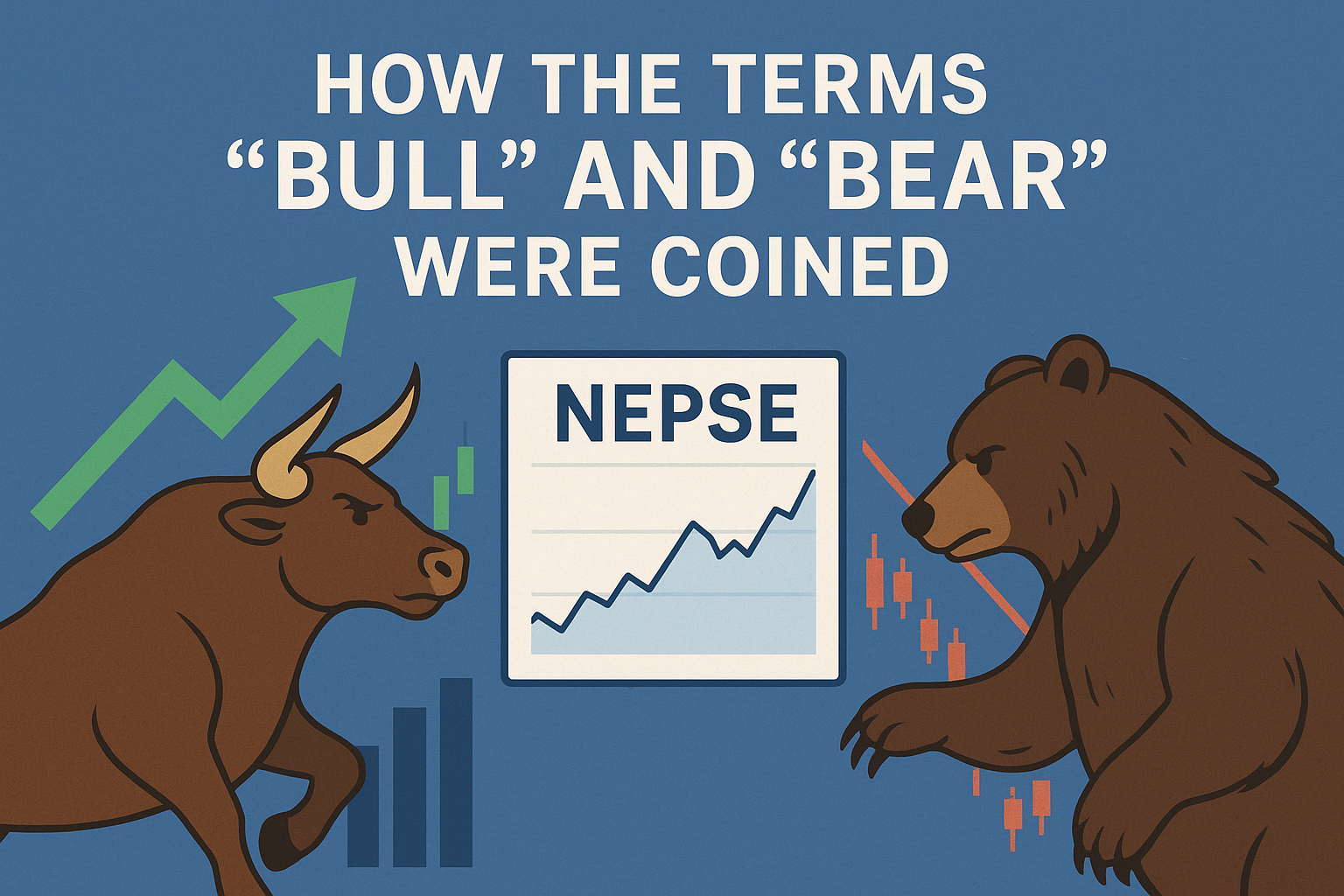

In Nepal's growing financial markets, especially NEPSE (Nepal Stock Exchange), the terms “bull” and “bear” are now common in investor conversations, financial news, and market analysis. But have you ever wondered where these animal terms actually came from, and how they became part of Nepal’s market language?
A bull refers to a market condition where prices of stocks or other securities are rising or expected to rise, usually driven by strong investor confidence, positive economic indicators, and high demand. In a bull market, investors are optimistic about future growth, which leads to increased buying, higher trading volumes, and a general upward trend in the market. The term comes from the way a bull attacks—thrusting its horns upward, symbolizing rising momentum in the market.
A bear signifies a period when the market experiences falling prices, typically by 20% or more from recent highs, often accompanied by fear, pessimism, and widespread selling among investors. In a bear market, economic conditions may be weakening, and investor sentiment turns negative, resulting in declining stock values. The term is inspired by the bear’s natural attack motion—swiping its paws downward, which represents a drop in market direction.
The term “bear” has its roots in an old proverb: "Don’t sell the bear’s skin before you’ve caught the bear." This warning advises against counting on profits before they're secured. It was popular among fur traders and was later adopted to describe speculative financial behavior.In 18th-century Britain, middlemen known as “bearskin jobbers” would sell bearskins they did not yet possess, betting that prices would fall before they had to deliver. This speculative practice mirrored short selling in modern markets. Over time, “bearskin jobber” was shortened to “bear,” and the term came to denote investors expecting or profiting from falling prices. Though the exact origins of “bull” are more elusive, it is widely understood that the term gained prominence by contrast with “bear,” reinforced by popular imagery and language around speculative trading. The use of both terms was solidified in Thomas Mortimer’s 1761 book, Every Man His Own Broker, which recorded the terminology in the context of London’s Exchange Alley.
"A Bull is the name by which the gentlemen of 'Change Alley choose to call all persons who contract to buy any quantity of government securities, without an intention or ability to pay for it, and who consequently are obliged to sell it again, either at a profit or a loss, before the time comes when they have contracted to take it".
This refers to the former practice of stock-brokers, abolished circa 1980's in London, allowing their clients to trade on credit during a period of about two weeks, known as an account, on the completion of which all purchases and sales made during the account period had to be paid for on the settlement date. A net trading loss would result in the client having to make a cash payment to the broker.
In essence, the terms “bull” and “bear” carry centuries of history, evolving from old trading slang in 18th-century London to widely recognized symbols in today’s global financial markets including Nepal’s NEPSE. While a bull embodies optimism and upward momentum, a bear reflects caution and downward pressure. Their colorful origins, rooted in both animal behavior and historical trading practices, give these terms a vivid character that resonates with investors. In Nepal’s fast-developing market, they not only describe market trends but also capture the emotions, strategies, and expectations driving investor behavior making them an enduring part of the country’s financial language.